September 2024 163
Mom Discovers Teen Daughter Stealing Vodka — But Not for Drinking
A story of assumed teenage misbehavior has a tasty twist.
On Aug. 25, Stacey (@StaceyCKs1) shared an anecdote about the alleged incident that went viral on X, garnering nearly 17 million views as of this writing. In a succession of posts, the mother wrote about the mystery surrounding a depleting bottle of alcohol in her liquor cabinet.
Noticed that my vodka supply was dwindling. Confronted 23 and 17, who pointed the finger at 14, who guiltily confessed to making penne allá vodka “several times” over the last month. Didn’t believe her, watched her execute it flawlessly. I guess it’s a TikTok thing?
— StaceyCKS (@StaceyCKs1) August 25, 2024
“Noticed that my vodka supply was dwindling,” the mom of three wrote. “Confronted 23 and 17, who pointed the finger at 14, who guiltily confessed to making penne allá vodka ‘several times’ over the last month. Didn’t believe her, watched her execute it flawlessly. I guess it’s a TikTok thing?”
“It’s really good, too. She crushed it,” she added in a follow-up post.
Her kid, likely noticing the attention her mom’s post was getting, also chimed in a few hours later.
She wants it known that she didn’t “guiltily confess” to anything. “I just answered the question.”
Sorrrrrry. My bad.
— StaceyCKS (@StaceyCKs1) August 26, 2024
“She wants it known that she didn’t ‘guiltily confess’ to anything. ‘I just answered the question,’” Stacey wrote. “Sorrrrrry. My bad.”
Stacey did not respond to TODAY.com’s requests for comment.
Naturally, people had questions — one X user asked how Stacey took so long to notice culinary greatness happening right under her roof.
The mom explains in subsequent posts that while she was home working the other times her kiddo made the penne, she doesn’t like pasta.
“She was making enough for her and her brother,” Stacey wrote, adding that her daughter would make the saucy dish for lunch or as an after-school snack. “They’re pretty good about cleaning up after themselves.”
After someone remarked that it’s good Stacey’s daughter didn’t replace the taken vodka with water (a classic teenage maneuver), the mom replied, “She wasn’t trying to hide what she was doing. These kids are different than we were. 😂”
I risked it all, taking a screenshot of a Snapchat message she sent me. She made it again after school yesterday. It’s her current “hyper fixation” meal.
— StaceyCKS (@StaceyCKs1) August 27, 2024
Stacey also said her daughter was using the “GOOD stuff” — aka Grey Goose — for the pasta because “that one was open.”
In addition to sharing the recipe (“A shallot and some garlic sweated in olive oil and a tablespoon of butter, a can of tomato paste, some Calibri chilies, maybe 10 ounces of San Marzano tomatoes, 2 cups of heavy cream, a cup of fresh parm, 2 tablespoons of vodka”), Stacey also posted a photo of her daughter’s latest “hyper fixation” meal.
Penne alla Vodka by Anthony Contrino
Those in Stacey’s replies were generally tickled by the whole situation.
“Very 14 year old coded 😂,” wrote one X user.
“This is the best possible outcome for this scenario. 😂,” posted another.
“Buy the child another bottle!” yet another jokingly wrote.
Social media’s obsession with pasta alla vodka remains strong. Supermodel Gigi Hadid’s fiery iteration of this recipe went viral in 2020 after she shared detailed instructions on her Instagram story amid the lockdown.
Stacey responded to a user on X stating that she believes her daughter discovered the recipe through Hadid.
The popularity of Hadid’s version has exploded, with numerous influencers on TikTok, Instagram and YouTube replicating the dish continuously over the years.
You can still find Hadid’s original recipe in her Instagram highlight “From My Kitchen II,” which also includes recipes for focaccia and monkey bread.
In 2023, Heinz and Absolut were inspired by Hadid’s viral recipe to team up for a vodka sauce.
That same year, Sofia Copolla’s daughter Romy Mars went viral for making the dish because she was grounded for trying to charter a helicopter from New York to Maryland using her father’s credit card to have dinner with a friend.
Teenage rebellion seems different these days — and it appears to involve a lot more pasta.
This article was originally published on TODAY.com
Chateau Ducru-Beaucaillou Marks 300 Years of Prestigious Winemaking

This narrative was photographed on June 23, 2024 at Chateau Ducru-Beaucaillou, located in Saint-Julien-Beychevelle, approximately 50 kilometers from Bordeaux, southwestern France. The chateau and winery is set to celebrate its 300th anniversary in October 2024.
Winemaking in the Bordeaux region has a rich history dating back 2000 years to the Roman era when the first vineyards were established. It gained further prominence during the Middle Ages following the royal marriage between Henry Plantagenet and Eleanor of Aquitaine, which helped introduce Bordeaux’s wines from the French coast to Britain and beyond.
The Bordeaux region has been a major hub of winemaking for centuries. A significant landmark, Château Ducru-Beaucaillou, is celebrating its 300th anniversary with events that offer a unique glimpse into the intricate world of French winemaking.
On an online wine seller’s site, a bottle of Chateau Ducru-Beaucaillou 2021 Saint-Julien 2e cru classe is listed for $250. In contrast, a bottle from the 2020 vintage is priced at $1584. The description mentions that the wine, made from 98% Cabernet Sauvignon and 2% Merlot, features a “Pure and concentrated” nose, blending crème de cassis with floral (fresh violet) and fruity (blackberry, blueberry) aromas. Upon aeration, it evolves to reveal exotic spices, cedar, cigar box, and smoked graphite notes.
The 300th anniversary celebration will be observed during the annual Harvest Festival scheduled for October 19th at the historic château. The festival honors a winery and château with a rich history, enduring through the French Revolution, the era of Napoleon, both World Wars, and the notable Judgement of Paris in 1976 where American wines were deemed on par with French vintages.
Consider how seldom Americans celebrate the 300th anniversary of anything. The United States marked the 200th year of the Declaration of Independence in 1976, but few will witness its 300th anniversary in another 52 years.
HOUSTON, TEXAS – JUNE 11, 1982 Jean-Eugène Borie, previous owner of the winery Bordeaux’s Château Ducru-Beaucaillou, was known for a classic vintage. (Information sourced from David Breslauer/Houston Chronicle via Getty Images)
The Ducru-Beaucaillou Harvest Festival will be overseen by co-owner Bruno Borie, who is passionate about cooking, hosting, and wine. The festival will feature:
A culinary workshop where participants can learn the intricacies of preparing duck stew with a wine sauce under the guidance of Chef Anthony Roy from Ducru-Beaucaillou.
An exclusive session to sample the varied wines from the Maison’s collection, presented by Ducru-Beaucaillou’s Master of Wine, Tracey Dobbin.
A “Concurs d’élevage bogin” event allowing attendees to admire some of France’s most exquisite animals as they gracefully march to violin accompaniment on the château grounds.
Experience the traditional craft of barrel making with a live demonstration by Master Coopers, detailing the steps to create the perfect oak barrel vital for aging wine.
In addition, guests will be able to enjoy a communal lunch at the Ducru-Beaucaillou harvest table.
Guests can also participate in masterclasses and wine discovery workshops, and enjoy the refined tastings. Outdoor games will be organized to bring conviviality to the event. Guided tours of the cellar will show the secrets of making great wines, and there is a ‘beef competition.’
Tickets to the festival are 60 euros but guests have the option to take a master class. If they opt to do so, tickets are 85 euros. The Chateau is a private residence so guests will be finding their own lodging.
A picture taken on August 23, 2019 shows the Cordouan lighthouse off the coast of Le Verdon-sur-Mer, southwestern France. – The Cordouan lighthouse is France’s oldest lighthouse still active. It has been in service since 1611 and is located seven kilometers offshore at the mouth of the Gironde estuary.
Bordeaux is renowned for its vineyards, picturesque countryside, local markets, and exquisite dining options. It is also famous for river cruises historically used by winemakers to transport barrels on flat-bottom boats. The region is home to the oldest operational French lighthouse, Le Phare de Cordouan, established in 1611, which is also celebrated as “the Versailles of the Sea” due to its magnificent architecture.
The area is increasingly well-known for surfing along the Atlantic coast. There are around 50 surfing schools offering activities like stand-up paddleboarding or surfboard yoga.
Bordeaux is 580 km from Paris, accessible easily by train. The fastest trains between Paris and Bordeaux take about 2 hours and 3 minutes, with tickets costing around $52 if booked a week in advance. By car, the Spanish border lies just 120 miles south.
The renowned Château Ducru-Beaucaillou, a Grand Cru classé within the Saint-Julien appellation, stands out in the Médoc region. The château’s website extols “In praise of voluptuousness”. Numerous other vineyards in the Médoc offer château visits and wine tastings. Bordeaux is particularly captivating in autumn, and its harvest festival provides a deep dive into both the local wine culture and broader regional traditions.
As noted by the Millesima website, “In the past 300 years, six families have worked ceaselessly to elevate this estate to the international reputation it enjoys today. A property of the Borie family since 1941, Chateau Ducru-Beaucaillou takes its name from its terroir of ‘beautiful pebbles’ made up of Gunzian gravel.”
A worker carries a wicker basket full of grapes during the harvest at the Corton-Charlemagne vineyard, in Pernand-Vergelesses, Bourgogne region south-eastern France on September 5, 2018.
One Community. Many Voices. Create a free account to share your thoughts.
Our community is about connecting people through open and thoughtful conversations. We want our readers to share their views and exchange ideas and facts in a safe space.
In order to do so, please follow the posting rules in our site’s Terms of Service. We’ve summarized some of those key rules below. Simply put, keep it civil.
Your post will be rejected if we notice that it seems to contain:
User accounts will be blocked if we notice or believe that users are engaged in:
So, how can you be a power user?
Thanks for reading our community guidelines. Please read the full list of posting rules found in our site’s Terms of Service.
Savoring Spirits the Hozier Way: Expert Tips from the Founder of Ammunition Wines and Whiskey

On a balmy evening in Woodstock, New York, in August, the melodies of Hozier filled the air as he sang his popular track “Too Sweet,” reflecting on the contrast between him and a love interest he considers too saccharine for his tastes.
As described by Hozier, he distinguishes himself by preferring his whiskey straight, his coffee without sugar or cream, and late nights over early evenings.
Amid the performance at Bethel Woods Center for the Arts, where the historic 1969 Woodstock Music Festival occurred, I was accompanied by Andy Wahl, co-founder of Ammunition Wines and Whiskey. He shared insights about whiskey and suggested ways to savor Hozier’s beverage of choice.
While Hozier favors his whiskey neat, I enjoyed the concert sipping a whiskey sour—a blend of whiskey, lemon juice, and sugar. Wahl explained that whiskey is not only versatile, appreciated neat, with ice, or in cocktails, but also pairs well with various meals, enhancing both light appetizers and robust dinners.
One common misconception about whiskey drinking, as pointed out by the founder of Ammunition, is believing there’s a correct or incorrect way to enjoy this beverage.
“Enjoying whiskey should be a relaxed activity with friends or family,” Wahl humorously remarked, adding that his main advice for beginners is to “explore their tastes.”
According to Wahl, becoming adept in whiskey appreciation simply requires understanding your preferences. “Judge for yourself and make decisions that enhance your sophistication and knowledge as a whiskey aficionado,” he suggested, emphasizing that there’s no singular method to enjoy whiskey.
However, Wahl did share that some approaches to savoring whiskey might be more enriching, especially how one smells it. Contrary to wine tasting techniques, when drinking neat whiskey, he suggests “allowing the aroma to rise gently by keeping the glass a few inches from the nose.” Following the olfactory experience, a subtle sip to let the flavor settle on the palate is recommended.
And just because Hozier enjoys his whiskey neat doesn’t mean you have to, as the addition of an ice cube is the perfect way to make the spirit more palatable.
“While drinking neat certainly is preferred by a lot of connoisseurs these days, it isn’t a requirement,” Wahl said. Take, for example, the brand’s Ammunition Bourbon and Rye, which is 90 proof and 45 percent ABV.
According to Wahl, with this slightly higher than normal alcohol proof, pouring the whiskey over an ice cube and slowly enjoying the drink over an hour “makes it really the perfect balance of water, oils, aromas and flavors.”
However, when it comes to whiskey, there’s one pairing that Ammunition Whiskey’s founder swears by: good company. “Like any refined and delicious whiskey, Ammunition Straight Bourbon should only be paired with the best of friends, family, and colleagues,” he explained. “Whether you are drinking neat, over ice, or mixed with a splash of coke, when drinking the finest whiskies they should only be enjoyed, cherished, and paired with the people you love and respect the most.”
Harnessing Yeast’s Killer Toxins: A Novel Solution to Craft Beer Brewing Challenges

September 12, 2024
This article has been reviewed according to Science X’s
and policies.
Editors have highlighted
the following attributes while ensuring the content’s credibility:
fact-checked
peer-reviewed publication
trusted source
proofread
by American Society for Microbiology
When diastatic strains of Saccharomyces cerevisiae, or brewer’s yeast, land in the wrong place, they can become a craft beer brewer’s nightmare. Diastatic yeasts are variant strains of yeasts that secrete glucoamylase, an enzyme that can break down dextrins into simple sugars, which can spoil fresh beer by augmenting the alcohol content, changing the flavor and in worst-case scenarios, making bottles explode.
One potential solution to yeast overgrowth in beer production may be found in a recent study published in Applied and Environmental Microbiology. Researchers, including brewers and microbiologists, discovered that certain proteins called killer toxins, naturally produced by many varieties of S. cerevisiae, can suppress problematic diastatic strains, offering a way to manage the issue effectively.
“Typically, if there’s a diastatic contamination, the entire batch of beer has to be discarded, which is costly,” explained microbiologist and study lead Paul Rowley, Ph.D., from the University of Idaho. “Our study demonstrates that introducing killer yeast at the point of contamination acts as a remediation strategy, preventing the diastatic strains from proliferating.”
Diastatic strains of S. cerevisiae are critical in crafting Belgian-style saison beers known for their higher alcohol content. Challenges arise, according to Rowley, when these strains inadvertently become part of the brewing process for pale ales and other beer types, triggering unwanted secondary fermentation. Despite stringent monitoring practices at breweries, these strains can occasionally go undetected.
Rowley notes that these diastatic variants are difficult to distinguish visually on an agar plate. “They look identical to non-diastatic types,” he explained. The significant difference lies in a genetic change in the diastatic yeasts which enables them to break down residual starches more effectively. “In appearance, yeast remains yeast,” he added.
Large breweries sidestep contamination issues by pasteurizing beer, although it’s costly and some small brewers claim it alters the flavor. Nicholas Ketchum, a microbiologist at Rhinegeist brewery in Cincinnati, Ohio and co-author of a recent study, oversees monitoring diastatic contamination there.
The initiative started when Ketchum was teaching applied microbiology and brewing at a community college in Cincinnati. While preparing a lecture about wild yeasts and killer toxins, he conceived the idea that these proteins could be a cost-effective solution to diastatic contamination. He conducted initial tests, shared early results at the World Brewing Congress in 2020, and later discussed the findings on a beer brewer’s podcast, which intrigued Rowley.
In Rowley’s laboratory, researchers including Victor Zhong and Ximena Garcia tested 34 diastatic yeast strains against Saccharomyces strains that produce eight different killer toxins. The most potent, K1 toxin, halted growth in over 91% of the diastatic strains tested.
Ketchum mentioned the next objectives involve understanding the mechanism better and devising ways to make it applicable for craft breweries. He noted that there’s a lot still unknown about how the process works, highlighting that toxin effectiveness may vary based on overall yeast concentrations, not solely on diastatic types. Additionally, Rowley is exploring the prevalence of this issue among smaller breweries.
The potential relationship between the amount of yeast and the effect of toxins is also under examination by Rowley’s team.
Rowley continues to investigate killer toxins, which haven’t been well studied. “Yeasts are a lot more complicated than we might think,” he said.
More information:
Applied and Environmental Microbiology (2024). doi.org/10.1128/aem.01072-24
Journal information:
Applied and Environmental Microbiology
Provided by
American Society for Microbiology
14 hours ago
0
15 hours ago
2
16 hours ago
0
Sep 11, 2024
0
Sep 11, 2024
0
7 hours ago
8 hours ago
8 hours ago
8 hours ago
8 hours ago
9 hours ago
9 hours ago
10 hours ago
10 hours ago
10 hours ago
Aug 20, 2019
Jun 20, 2024
Sep 1, 2024
May 16, 2024
Dec 3, 2019
Dec 14, 2020
11 hours ago
12 hours ago
13 hours ago
14 hours ago
15 hours ago
15 hours ago
Mastering the Art of Crafting the Perfect Wine List: Essential Tips and Tricks

Size as needed (160 dpi, 25p x 33p), Philip Brooker color illustration of people looking at wine list as waiter with bottles stands in background. (The Miami Herald/Tribune News Service via Getty Images)
The majority of wine lists I encounter are quite inadequate. Often, large restaurant chains and hotels feature core lists that require branches to carry certain bottles everywhere. This restricts a wine director’s ability to introduce new selections that might better complement the menu or locale.
In my recent move to Miami, I was intrigued by how sommelier Jorge Mendoza crafts a truly international wine list at Ritz-Carlton Key Biscayne Miami. Highlights from my latest visit include Pierre Péters Grand Cru Champagne and El Sueño de la Alondra 2021 from Ribera del Duero. I was particularly impressed with the extensive variety in the hotel’s selection in a city often limited to more typical offerings.
All responses have been edited and condensed for clarity.
Liza B. Zimmerman (L.B.Z.): How do you approach a new wine list for a new restaurant menu?
Jorge Mendoza is the sommelier at the Ritz-Carlton Key Biscayne.
Jorge Mendoza (J.M.): When approaching a wine list for a new restaurant, I start with an open mind and a deep understanding of the chef’s cuisine and signature flavors. It’s essential to stay in tune with both local preferences and global trends. Every community has its flavor profile, and knowing what excites the local palate allows me to craft a wine list that’s not only relevant and dynamic, but also makes good business sense.
L.B.Z.: Are there set, core wines, that you always add to a restaurant list such as Champagne or Burgundy?
J.M.: Absolutely—Champagne is a must. As the saying goes, “When in doubt, Champagne.” Burgundy is another favorite, especially for those who appreciate its depth and complexity. I also have a soft spot for Riesling as well, which pairs beautifully with many dishes here in Miami. Spanish wines, with their great variety and value, often make the cut, as do Italian white wines, which offer a delightful range of flavor profiles.
Arial view of Key Biscayne Bay overlooking Miami Downtown
L.B.Z.: Do you have to carry some of the wines that the other Ritz properties carry?
J.M.: Yes, there are certain wines that you will find across all our properties. These selections reflect the hotel’s commitment to offering a consistent wine experience.
L.B.Z.: Is there a set number of wines by the glass that you like to offer in a restaurant?
J.M.: We typically offer six reds, six whites, four sparkling wines, and one or two rosés by the glass. Occasionally, we introduce a “Sommelier Selection” that features a lesser-known wine to keep the selection fresh and exciting, in line with current market trends.
The dining room at Lightkeepers.
L.B.Z.: How often do the wine by-the-glass (btg) and by-the-bottle (btb) offerings change?
The selections of btg often change with the seasons or each year, and btb options might shift as frequently as every week. At times, my inventory includes only a limited number of a specific wine, and once those are sold, I need to update our offerings—sometimes this happens daily!
L.B.Z.: When it comes to crafting the wine list, how do you balance considerations like food pairings, pricing, or customer interests? Additionally, do you prioritize the preferences of locals over tourists, or how do you cater to both groups?
J.M.: Food pairings play an essential role in the development of a wine list, yet the foremost concern is always the quality of the wine. While prices are factored into the decision-making process, the primary focus is on delivering outstanding value with the wines. We strive to serve a diverse clientele, be they local patrons or out-of-town visitors.
L.B.Z.: How do wine preferences of different types of guests differ?
Preferences do vary based on background, but ultimately, everyone is looking for a wine with character that enhances their dining experience.
L.B.Z.: How did your wine list change when you switched from an Italian restaurant concept to Lightkeepers? This was a change that happened in 2017.
Oysters in Key Biscayne.
J.M.: The shift was significant—Italian wines went from dominating 60 percent of the list to making up just around 10 percent. We also streamlined the selection, cutting the number of offerings in half.
L.B.Z.: How do you source allocated wines?
J.M.: Building and maintaining relationships is key. I make a point of attending fairs, visiting vineyards, and participating in tastings whenever possible. Meeting winemakers and vignerons personally help establish the connections necessary to source these exclusive wines.
One Community. Many Voices. Create a free account to share your thoughts.
Our community is focused on fostering connections through open and thoughtful dialogues. We encourage our readers to express their opinions and exchange knowledge and ideas in a respectful environment.
To maintain this atmosphere, we ask you to adhere to the guidelines outlined in our Terms of Service. Here is a brief overview of these essential rules: please maintain a respectful tone at all times.
Your contribution will be declined if it appears to include:
Additionally, user accounts will be suspended if we determine or suspect that members are participating in:
So, how can you be a power user?
Thanks for reading our community guidelines. Please read the full list of posting rules found in our site’s Terms of Service.
Spotlight on Spirits: SirDavis American Whisky – Our Whiskey of the Week
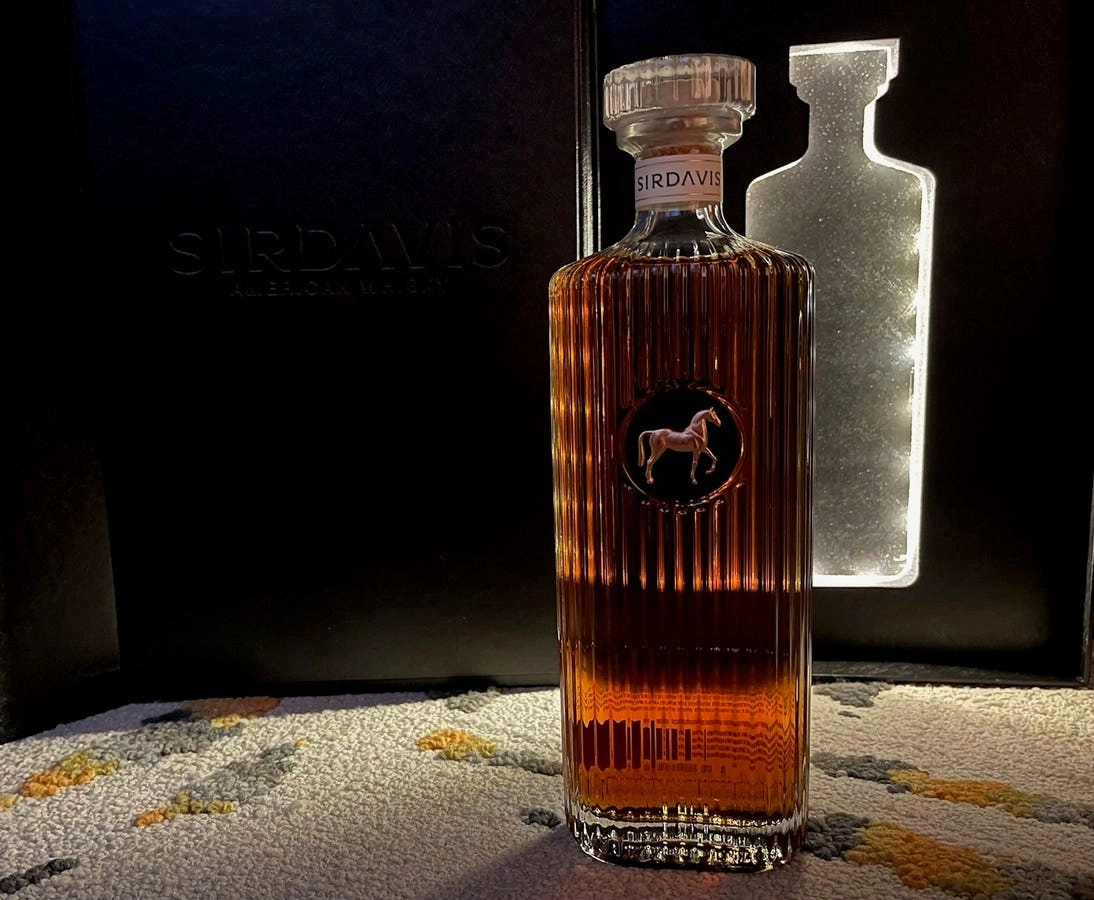
Beyoncé is not the only celebrity involved with this distinctive and tasty whisk(e)y.
Don’t judge a whiskey by its bottle—though in this case both bottle and whiskey are quite appealing.
The spirits world is abuzz about the latest celebrity whiskey to come down the well-worn celeb-booze pike, and with good reason. It’s the first whiskey of its kind from one of the brightest lights in the industry. A star since before the turn of the millennium who just keeps going, with each new release another piece added to a glorious mosaic of a singular career. And this time, Beyoncé’s selected him to help lead her newest business venture.
Of course, I’m kvelling about Dr. Bill Lumsden, Moët Hennessy’s “director of whisky creation,” who’s almost as big in Scotch whisky circles as Beyoncé, his collaborator on SirDavis American Whisky, is in, um, just about every other circle. Dr. Bill is in charge of two very different Moët-owned brands—Glenmorangie, a sweet, creamy Speyside malt, and Ardbeg, a big, bold and smoky peated malt from Islay. Lumsden is affectionately called “the mad scientist of whisky” because he never stops experimenting with malting techniques, aging methods, cask finishes, you name it. Hardly a year goes by without at least a couple of new Glenmo and Ardbeg expressions, sporting names like A Tale Of The Forest and Heavy Vapours, many of them tweaking the signature flavor profiles to a greater or lesser degree.
Lumsden, hailing from Scotland, possesses a distinct accent that underscores his heritage. He shares a love for lesser-known pop music remixes, including one of a Prince song. Despite his musical tastes, Lumsden had never ventured into crafting American whiskey, until he crossed paths with Beyoncé. Known widely by her first name, Beyoncé, or Beyoncé Knowles-Carter for formalities, took inspiration from her great-grandfather, a Prohibition-era moonshiner, to create her own whiskey. Drawing on her influence, she enlisted Lumsden to bring this vision to life.
The product of their collaboration is SirDavis, a standout whiskey exceeding mere adequacies and presenting itself as one of the year’s most compelling tastings. Its unique makeup consists of 51% rye and 49% malted barley, deviating from typical American recipes. This no-age-statement whiskey was finished in sherry casks, likely contributing nuances reminiscent of either Oloroso or Pedro Ximenez, and is bottled at 44% ABV.
Although typically skeptical of celebrity-endorsed spirits, I admit that SirDavis aligns with Lumsden’s high standards and aptly honors Beyoncé. Labeled as “American Whisky,” the spelling hints at a Scotch influence, distinguishing it from typical American whiskeys. Initial tasting notes include dark fruits, clove, and roasted nuts, courtesy of the barley and sherry, while the rye introduces a spicy backend, blending seamlessly with the other elements.
Is it a rye whiskey for Scotch lovers? A single malt for rye fans? A dram to convert whiskey agnostics who bought it for the Beyoncé connection? Yes, yes, and yes. At $90 for a (very attractive) bottle, it’s not cheap, but it’s beautifully packaged…and it tastes great while Cowboy Carter is on.
One Community. Many Voices. Create a free account to share your thoughts.
Our community is about connecting people through open and thoughtful conversations. We want our readers to share their views and exchange ideas and facts in a safe space.
In order to do so, please follow the posting rules in our site’s Terms of Service. We’ve summarized some of those key rules below. Simply put, keep it civil.
Your post will be rejected if we notice that it seems to contain:
User accounts will be blocked if we notice or believe that users are engaged in:
So, how can you be a power user?
Thanks for reading our community guidelines. Please read the full list of posting rules found in our site’s Terms of Service.
USVI Sees $181 Million Rum Tax Remittance: Impact of Decreased Tax Rates on Revenue

The U.S. Department of Interior announced on Thursday that the U.S. Virgin Islands has received an advance payment of $181,068,638 in rum excise tax remittances from the Office of Insular Affairs (OIA), indicating a vital revenue source for the territory.
However, this amount shows a decline from previous years when the remittances were made using a higher tax rate of $13.25 per proof gallon of rum. Nowadays, the territory receives these funds at a tax rate of $10.50 per proof gallon, leading to reduced remittances.
Had the U.S. Virgin Islands continued to receive the rum excise taxes at the former rate, the territory would have amassed approximately $228.49 million, showing a shortfall of about $47.42 million. These rum tax remittances are critical in supporting the territory’s bond covenants and the securitization of the Government Employees’ Retirement System, with any reductions potentially having profound effects.
Delegate to Congress Stacey Plaskett, who has long vowed to address this issue and introduced legislation with her colleagues towards this cause, later commented to the Consortium that Republican intransigence was to blame for the prolonged delay of the effort.
The OIA collaborates with the U.S. Department of the Treasury to facilitate swift transmission of funds, noted by Assistant Secretary for Insular and International Affairs Carmen G. Cantor. Each year, the GVI provides an estimation of rum excise taxes to set the basis for advanced payments for the next fiscal period. These amounts are adjusted according to the actual receipts recorded by the federal government.
Guam Receives $76 Million in Section 30 Funds
The Office of Insular Affairs has also allocated $76,402,101 to Guam in a different transaction. This amount includes federal income taxes gathered from U.S. military personnel and retirees living in Guam under the Organic Act of Guam’s provisions. Similar to the U.S. Virgin Islands, Guam gets a yearly advance from the OIA that is later adjusted based on the actual federal income tax collection.
These transfers are crucial for supporting the governmental operations and local services in Guam, helping the territory fulfill its commitments to its citizens. The OIA expressed its ongoing dedication to managing these payments and upholding the economic health of the U.S. territories.
Tito’s Vodka Champions Animal Welfare: Matching Donations for Massachusetts Shelter Pets Needing Surgery

SPRINGFIELD, Mass. – Tito’s Handmade Vodka is committing to match donations to Second Chance Animal Services for pets needing significant medical interventions.
The contributions will support the non-profit veterinary clinic in treating pets like Johnny, KJ, and Laura. Throughout September, Tito’s pledges to match donations to Second Chance Animal Services up to a total of $5,000.
Fundraiser launched to help four shelter animals in need of medical care
“Tito’s Handmade Vodka has consistently supported our goal of offering critical medical care to animals in need,” mentioned Lindsay Doray, the Chief Development Officer at Second Chance. “This generous matching challenge of $5,000 from Tito’s affords our community a wonderful chance to enhance their contributions, assisting an even greater number of pets to get the essential treatments they require.”
Second Chance Animal Services operates in several locations including North Brookfield, Southbridge, Springfield, and Worcester. To make a donation, you can visit secondchanceanimals.org.
Established in March 1953, WWLP-22News, an NBC affiliate, serves the western Massachusetts area with local and network programming. You can stream the 22News Digital Edition on weekdays at 4 p.m. via WWLP.com.
Copyright 2024 by Nexstar Media, Inc. All rights reserved. This content may not be published, broadcast, rewritten, or redistributed.
For the latest news, weather, sports, and streaming video, visit WWLP.
Experience Haitian Cocktails in a Speakeasy Setting at Sousòl
For over two decades, Jason Calvanese has served as a bartender in Portland. Presently, he holds the position of beverage director and bar lead at Sousòl, a speakeasy-style bar situated just around the corner from Kann, a restaurant that has won a James Beard award. Read online: https://www.koin.com/northwest-grown/haitian-cocktails-in-speakeasy-vibe-sousol-is-the-place/
Opinion: Denver’s Dining Dilemma: The High Price of Inedible Chicken and Extravagant $20 Cocktails

Dear new (and veteran) dining spots in Denver,
It seems there might be some confusion about who you think you’re catering to. Was it intentional to set the price at $36 for a dish of chicken that barely passed as palatable? And that cocktail which vanished in three sips, was it genuinely meant to be $20?
Should I have felt thankful after spending $72 on that barely edible meal and minuscule cocktail, only to find myself stopping by Good Times to satisfy my hunger? Actually, it turned out to be closer to $80 once the kitchen fee, worker health insurance fee, and farmers’ fee were tacked on. (I understand the reasons but still, it stings!)
I recognize that the minimum wage has surged, that the cost of downtown real estate might be inflating more than my $18 mini personal-sized pizza, and that the prices for meat, eggs, and almost all other consumables (unlike that chicken) have climbed as sharply as my home insurance premiums.
I also recognize the importance of a satisfying meal and am willing to invest in such experiences. I once traveled to San Francisco just to try a specific loaf of bread, and I’ve shared stories here about a dinner that cost $450 per person, which completely shifted my perspective on dining. Over the years, I’ve chosen to explore new culinary hot spots rather than saving for retirement. (Oops!)
Many restaurants in Denver justify their prices well. However, you, the new restaurant in RiNo, do not yet possess the reputation of Frasca to demand $215 for your tasting menu. I doubt you’re introducing groundbreaking innovations on sweet potatoes similar to what I’ve seen at Alma Fonda Fina. Nor do you offer the best version of any dish in town, or even make the top ten, so it might be wise to reconsider your pricing of $7 per dumpling.
Unlike some places that manage to captivate my family for hours like Casa Bonita, your restaurant, branding itself as a casual neighborhood spot, disappoints with a $17 starter-sized salad and cramped seating arrangements. Charging $30 just to make a reservation and then informing customers they’ll lose their seat without a purse hook after 90 minutes is less than welcoming.
Spending a few hundred dollars on a meal at upscale restaurants is becoming the norm, even without including the cost of drinks. Indeed, that’s a significant amount for many, including myself. Such expenses might account for a person’s major celebratory meal of the year. If the charge reaches more than $16 for a cocktail and $35 for eggplant, those items truly need to be exceptional.
And the thing is, new LoHi restaurant, yours are not. You’re not doing anything better or more unique than the last disappointing restaurant that opened a block down that’s still clinging to QR code menus and wants me to bus my own table.
Yes, I know I’m a privileged food writer who often gets these sorts of meals for free. I and my colleagues and the outlets that give us a $40 dining budget to find the 12 best sushi restaurants in town need to do better at telling our readers what’s worth it and what isn’t. I’m also a huge Denver restaurant fan who, when I’m off the clock, can’t afford to keep paying $300 for ho-hum meals. It’s my job to hype the greats, but what to do with the not-so-greats?
I know that it’s challenging to make the restaurant economics work. But it’s not just you whose math just ain’t mathing. Our budgets are tight, too, and I can’t take my kids out for breakfast when your basic egg and cheese sandwich is $20. There’s certainly a place for fine dining done well, but increasingly, decidedly un-fine dining is being priced at that level.
Someday, newish restaurant, you might nail that chicken and build a staff where the hospitality alone is worth the price of admission. But come on, we both know you’re not there yet, so stop pretending you’re Alinea and put away the tweezers and mini squeeze bottles for fussy food prep and focus on best serving your current customers so they want to come back.
There’s got to be a way to make eating out work for everyone. Maybe instead of jacking up your intro pricing to match the James Beard Award winners across town, you prioritize serving a good meal, at a fair price? I really want to support you — I think we all do — but I also want health insurance, and I can’t seem to afford both.
Gastronomically yours,
Denver diners
Allyson Reedy is a food writer and restaurant critic in Broomfield. She’s the author of 50 Things to Bake Before You Die and 30 Breads to Bake Before You Die.
Sign up for Sound Off to get a weekly roundup of our columns, editorials and more.
To send a letter to the editor about this article, submit online or check out our guidelines for how to submit by email or mail.