August 2024 163
A Beginner’s Guide to Rosé Wine: Everything You Need to Know
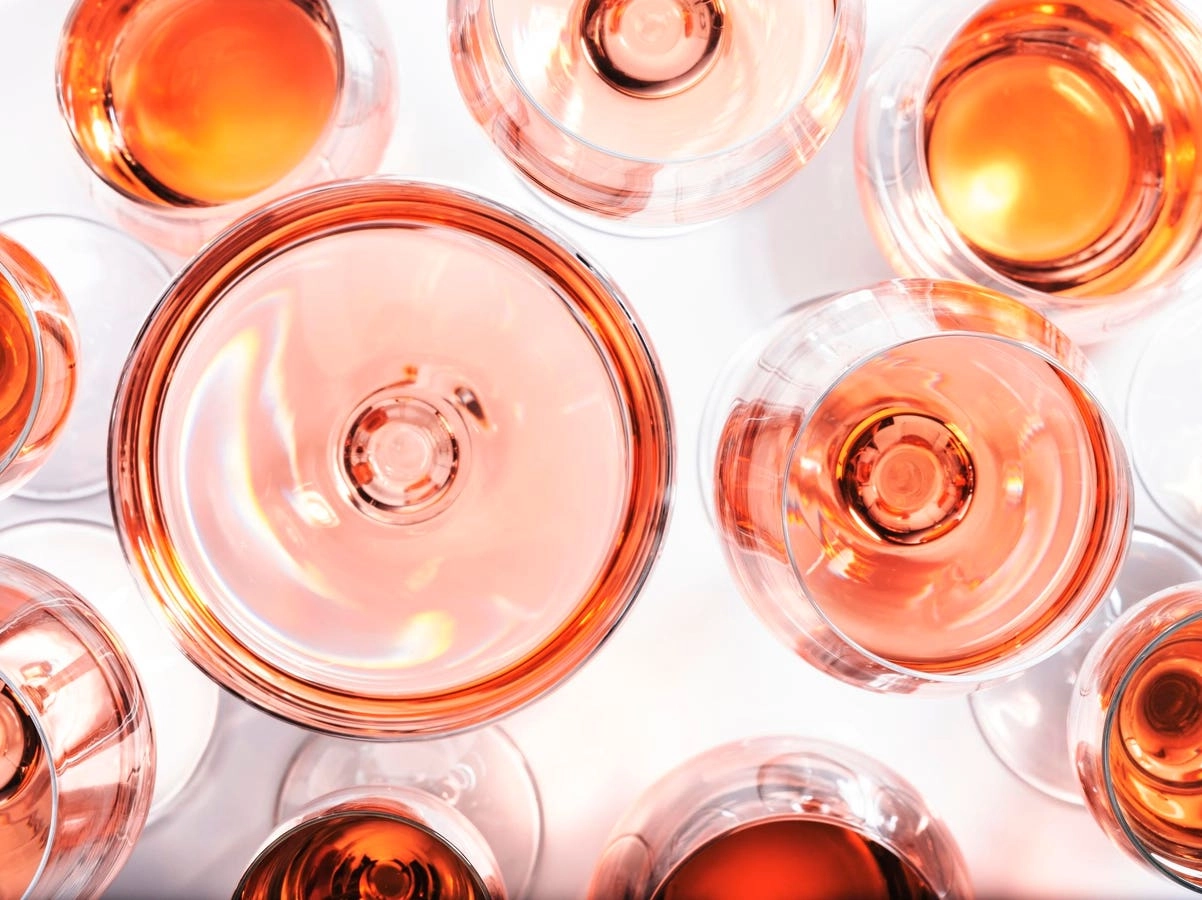
Rose wine glasses set on wine tasting. Different varieties, colors and shades of pink wines on white… background. Top view
Rosé: it’s pink alcohol, served cold by the pool, right? On one hand, absolutely. On the other, this over-simplifies a surprisingly nuanced wine encompassing impressive historical and cultural traditions in some of Europe’s great appellations. Of course, nuanced doesn’t mean so complex it’s too intimidating to learn the basics. If you’re looking for a break-down of the differences in rosé, from the effect picking and production techniques have on style, color and taste, to a review of classic European regions, bookmark this page. Next time you reach for a bottle, you’ll know the difference between Tavel, Rosado, or Rosato.
Production Methods
Though it’s commonly believed that rosé is made by blending white with red, most bottles are made through skin contact (like a red wine) known as “saignee.” Blending red wine into white is only common in Champagne — not in quality still wine. Further, another misconception leftover from America’s white Zinfandel days is that rosé is off-dry or even sweet. In fact, most quality-driven rosés are a variation on bone dry.
Skin Contact
Have you ever heard a producer use the phrase “intentional rosé?” The concept entails growing and harvesting grapes for the express purpose of making rosé wine. This means picking early to preserve freshness and bright fruit flavors, followed by a limited maceration. In other words, winemaking follows the same technique as for red wine: crushing grapes and allowing the juice time on the skins. But for rosé, that time is far less, from a few hours to two days. The shorter the period, the lighter the color – think pale salmon versus dragon fruit pink. After maceration, the wine is drawn off and fermented to full dryness.
Direct press is a variation on this, though is more akin to white winemaking. Rather than allow any contact between skins and juice, the grapes are pressed and the juice is drawn off the skins. But because the grapes are black, the juice will take on a hint of color and flavor. This method yields a delicate rosé, one that’s faint in color, while favoring citrus flavors over red fruits.
Wine glasses and appetizers on the table in the vineyard orchard.
Saignée
French for “bleeding,” saignée is often a byproduct, though not always – see Navarra – of red winemaking rather than utilized as an intentional rosé winemaking method. Grapes are not picked expressly for rosé but rather for the primary red wine. This technique is common in Paso Robles, for example, where winemakers seek to produce concentrated, bold, and flavorful reds. Bleeding some wine off early in the maceration process concentrates the remaining juice; and the lighter juice that’s bled off gets vinified separately for rosé. Though it’s an acceptable method, wines can be an afterthought. Rosé generally demands freshness, and grapes picked for concentrated reds are usually the opposite: ripe with higher alcohol. Of course, it’s a matter of taste – saignée is great for those who prefer a richer, fruitier style of rosé.
Blending
Except maybe late night at a party, fine wine producers don’t blend red and white wine together. At least, French appellations do not allow it, except for one: Champagne. For rosé Champagne, producers may add still Pinot Noir or Pinot Meunier for hue and flavor. Outside of Europe, a few New World producers might blend white and red but it’s not the norm for quality wine production.
View on ancient village of Aiguines, Provence, France
FRANCE
Provence, France
If you’ve sipped a glass of rosé, you’ve probably tasted one from Provence. The OG of pink wine, denizens of the south of France view rosé as a way a of life, not just a beverage. Stylistically, Provençal rosé is distinct, too.
Typically, wines are made intentionally, picked for citrus and tart red fruit flavors, with limited skin contact for lighter hues and delicacy of flavor. It’s not a big, brash, fruity wine; rather, they are meant as crisp, versatile food wines to be enjoyed with vegetables, seafood and even meat. The classic grapes are Grenache, Cinsualt, and Mourvèdre. Bandol has a large presence in the U.S. for its high quality, pricier versions made from Mourvèdre. Wines are savory, mineral-driven and structured, rather than simple and fruit-forward. Bandol is a rosé that can age.
Though Provence is better-known in the U.S. market, Tavel is the only French appellation specializing in dry rosé. Talk about intentional winemaking. The primary grape used in Tavel is Grenache. Other grapes allowed include: Cinsault, Bourboulenc, Clairette (pink and white), Mourvèdre, Picpoul (black, white, grey), and Syrah. While white wine cannot be blended with red, white grapes and their press juice can be added pre-fermentation.
Due to longer skin contact, the wines achieve greater color and depth of red fruit flavor. This lends more tannin, structure, and age-worthiness from top producers.
Chinon, Touraine, Anjou, Loire Valley: Based on Cabernet Franc, the best rosés weave delicate vegetal notes from the Cab Franc with juicy red fruit flavors.
The Camino de Santiago is a pilgrimage which can be walked by connecting various different trails and routes through Europe ending at the tomb of St. James in north west Spain.
SPAIN
Spaniards have been drinking rosé for ages; only in recent years have those bottles made their way stateside. Often, producers made simple, quaffable wines. But as exports have increased, so has quality. Instead of rosé, bottles will say rosado. Grenache and Tempranillo are the main varieties used for making various styles, though often in a deeper hue than their French counterparts.
Navarra
Navarra rosé helped make the region famous. Producers turn out both poolside sippers and more complex, food appropriate expressions. Grapes used include Tempranillo, Cabernet Sauvignon, and Merlot, though rosado from old-vine Grenache is considered the highest expression for the region. Saignée method is typical, but in the case of Navarra, wines are of good quality, not after thoughts.
Rioja
Unusual in the world of rosé, or rosado, is the application of aging classifications to this style of wine. Most producers of rosé tout new vintages for their youthfulness and freshness, using stainless steel vessels in that stylistic pursuit. That, or they need to move product for cash flow. But in the case of Rioja, rosado follows the classic aging rules in oak barrels: joven (no aging requirement), crianza (aged for 12 months including 6 months in barrel); and reserva (2 years including 6 months in barrel). Grenache and Tempranillo are the primary grapes.
Txakoli
Spain’s northern Basque country is home to unusual, indigenous varieties used to produce dry, effervescent Txakoli. Though rosé is a recent phenomenon, it’s becoming easier to find in the U.S. Made in a pale shade of pink, wines are mineral and tart, and largely based on red grape Hondarrabi Beltza.
Beautiful Medieval Villlages Of Italy. Pacentro, Abruzzo.
ITALY
Known as rosato in Italy, rosé is made up and down the boot, with styles and flavors dependent on the local climate and traditional varieties. You’ll find more delicate versions produced in the northeast around Veneto, Friuli-Venezia Giulia and Trentino-Alto Adige. Logical, given the cooler climate. That includes Chiaretto from Lombardy and Veneto. “Chiaro” means light or pale, evoking the dry style of the wine based on the Corvina grape. Ramato, from Friuli, is based on extended maceration with pink grape Pinot Grigio.
Central Italians, of course, produce rosato. One better known example: cherry-pink Cerasuolo of Abruzzo made from the Montepulciano grape.
In the south, rosatos are fuller-bodied and fuller-flavored like the sun and the food. Puglia, Sicily and Calabria turn out lots of examples with native grapes like Negroamaro (Puglia) and Nero d’Avola (Sicily).
One Community. Many Voices. Create a free account to share your thoughts.
Our community is about connecting people through open and thoughtful conversations. We want our readers to share their views and exchange ideas and facts in a safe space.
In order to do so, please follow the posting rules in our site’s Terms of Service. We’ve summarized some of those key rules below. Simply put, keep it civil.
Your post will be rejected if we notice that it seems to contain:
User accounts will be blocked if we notice or believe that users are engaged in:
So, how can you be a power user?
Thanks for reading our community guidelines. Please read the full list of posting rules found in our site’s Terms of Service.
Bourbon vs. Rye: Do Traditional Categories Still Matter in Today’s American Whiskey Scene?
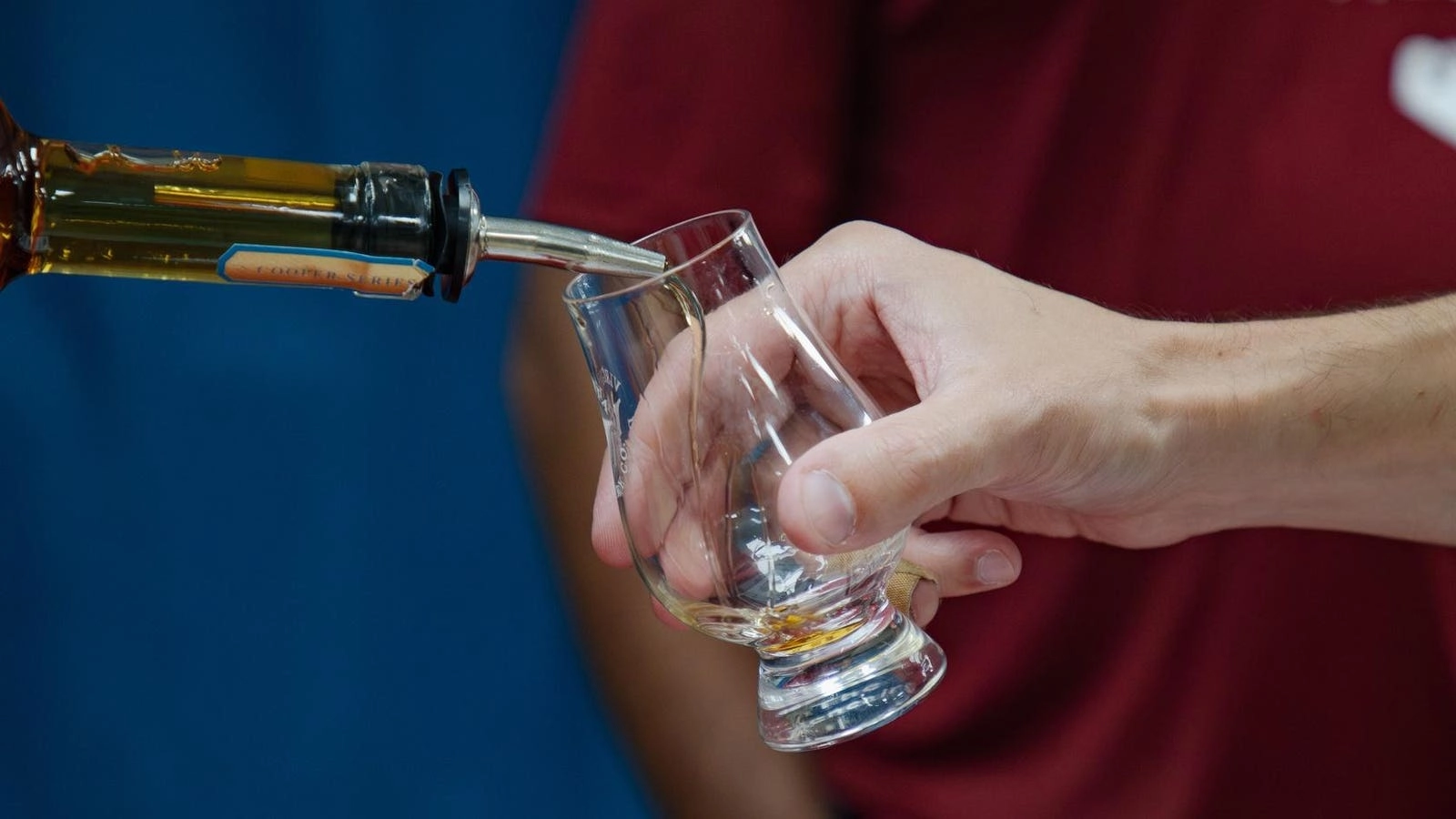
Sampling bourbon at a local whiskey festival.
I live in a typical American town, far from Kentucky, in a state with a surprisingly active whiskey scene. There are local whiskey clubs, a rotating lineup of whiskey-themed dinners at community restaurants and plenty of dedicated retailers that select high-quality single barrels for their patrons. There are multiple Facebook groups dedicated solely to local whiskey happenings. Lines form in the wee hours of the morning for well-publicized single barrel releases and there are, ahem…,strong rumors of an active local gray market that’s always open for business.
If you live in the U.S. and can relate to this story, you’re not alone. The United States has embraced whiskey culture in a way that seemed unfathomable at the turn of the century. The domestic whiskey market has always followed a cyclical boom-bust pattern during its history, yet these feel like unprecedented times. What makes this current market boom different? The internet—and social media in particular—not only connects us with others around the globe, but it makes it much easier to tie local communities together like never before. In my local online and in-person communities, I see photos and discussions about all kinds of American whiskey, including bourbon, rye and American single malt among others.
Ask an American whiskey drinker what they’re into and most of the time, they’ll keep it simple and say “I like bourbon”. This is a gross oversimplification of the likely, more complicated answer: “I drink bourbon—both rye-based and wheated, as well as rye. I’ve also tried and enjoyed wheat whiskies and straight malt whiskies a few times.” While accurate, it doesn’t exactly flow off the tongue.
Today’s whiskey consumer is familiar with the two most important legal requirements used to categorize American whiskey. Regardless of the grains used, most categories of American whiskey must be aged in brand-new, charred oak. The real distinction, however, comes down to the grains used in the whiskey’s production. Whiskey must be created from a mash bill containing at least 51% corn or rye to be called “bourbon” or “rye” whiskey, respectively. That same 51% major grain requirement can also apply to malt whiskey (not to be confused with single malt) and wheat whiskey.
At first glance, these designations give the impression that different categories result in clearly defined flavor profiles. In reality, though, most styles of American whiskey mash bills lie on a broad spectrum of grain proportions and consequently, a continuum of flavors that makes it impossible to pigeonhole each style into a single flavor set.
For example, the most in-demand bourbons made at the Buffalo Trace distillery (including Eagle Rare, Stagg, and E.H. Taylor) use their “Mashbill No. 1”—a low-rye mash bill that’s strongly rumored to contain less than 10% rye. By comparison, Four Roses “B” mash bill contains 35% rye, well above the generally accepted “high-rye” threshold of 20%.
Speaking of Four Roses, the distillery recently announced two new mash bills that illustrate the wide dynamics of bourbon perfectly. The first new mash bill is comprised of 52% corn, 43% rye and 5% malted barley—a whiskey made with almost as much rye in the recipe as there is corn. The second mash bill is made from 85% corn, 10% rye and 5% malted barley. Four Roses uses several different yeast strains, but assuming all other production factors are the same, these two whiskies will likely taste very different despite both bourbons being made at the same exact distillery.
Expressions made from a blend of multiple whiskey styles are becoming more and more common as distilleries emphasize flavor over convention. Here are a few examples of bottles that have no classic categorization, but have made waves over the last few years.
High West Bourye
This list wouldn’t be complete without first mentioning High West Bourye, one of the earliest examples of modern whiskey made from a blend of straight bourbon and straight rye whiskies. The source whiskies have changed over the last decade, but the premise is always a combination of well-aged bourbons and ryes.
The 2024 edition is comprised of several whiskies, each aged at least 10 years. The components include straight rye whiskey from mash bills of 95% rye, 5% malted barley and 80% rye, 20% malted barley. These are blended together with straight bourbon whiskey from mash bills of 75% corn, 21% rye, 4% malted barley as well as 78% corn, 10% rye, 12% malted barley.
Wild Turkey Master’s Keep Unforgotten
Wild Turkey is no stranger to blending bourbon and rye together, though it hasn’t always been on purpose. In 2010, a distillery employee mistakenly blended bourbon and rye stocks together. Making the best of a bad situation, the whiskey was released with the title Forgiven, a nod to making the best of an honest mistake.
A few years ago, the distillery took a more deliberate approach to this blend of whiskey styles with the release of Wild Turkey Master’s Keep Unforgotten. Unforgotten is made from 13-year-old bourbon blended with 8 and 9-year-old rye. This blend was then finished in rye casks in Wild Turkey’s historic Warehouse B and bottled at 105 proof.
Wyoming Whiskey Outryder
Wyoming Whiskey’s Outryder takes a unique approach to marketing by leaning heavily into its status as a whiskey that doesn’t fit neatly into one category. The name Outryder helps further illustrate a unique approach that results in a “best of both worlds” flavor profile. Wyoming Whiskey describes this expression as a blend of “an almost Rye Whiskey and a High Rye Bourbon,” bottled at 100 proof. It’s the distillery’s first foray into the use of rye whiskey in any capacity.
Redwood Empire Lost Monarch
Sonoma county’s Redwood Empire burst on the scene in the 2020s with expressions like Emerald Giant and Pipe Dream. Their bourbon and rye blend, Lost Monarch, is named after the 321-ft tall coastal Redwood tree of the same name. Lost Monarch is “a blend of 3 to 14-year-old Bourbon and 3 to 14-year-old Rye Whiskey.” The whiskey components are 55% rye from a mash bill of 94% rye, 5% malted barley, 1% wheat and 45% bourbon from a mash bill of 74% corn, 20% rye, 4.5% malted barley, 1.5% wheat. Lost Monarch is the only whiskey in this list that incorporates wheat in the blend, albeit in trace amounts.
As distillers continue to push the boundaries of blending, it will be interesting to see what combinations are brought to market. Perhaps we’ll see a blend of wheated bourbon and straight wheat whiskey. How does the popularity of straight malt whiskey impact future projects? What about the bourgeoning American single malt space? Today’s whiskey consumer continues to demonstrate a willingness to branch out and try new things. If a distillery has a new or experimental blend in mind, now is the right time to test the market.
One Community. Many Voices. Create a free account to share your thoughts.
Our community is about connecting people through open and thoughtful conversations. We want our readers to share their views and exchange ideas and facts in a safe space.
In order to do so, please follow the posting rules in our site’s Terms of Service. We’ve summarized some of those key rules below. Simply put, keep it civil.
Your post will be rejected if we notice that it seems to contain:
User accounts will be blocked if we notice or believe that users are engaged in:
So, how can you be a power user?
Thanks for reading our community guidelines. Please read the full list of posting rules found in our site’s Terms of Service.
Pittsburgh Ranks Among Top U.S. Cities for Beer Enthusiasts

By
July 31, 2024 / 7:56 PM EDT
/ CBS Pittsburgh
PITTSBURGH (KDKA) — Pittsburgh is among the best cities in the United States for beer lovers, a new report found.
Tasting Table released the “15 Best US Cities For Beer Lovers In 2024” report this week, and Pittsburgh made the top 10. The Steel City came in at No. 7 with a score of 53.
“If you’re in the area make sure to check out literally anything from Dancing Gnome Brewery, featuring industrial vibes and a hop-forward tap list, to the up-and-coming Old Thunder Brewing Co., or enjoy the ever-popular Grist House,” Tasting Table said in its report on Pittsburgh.
The blog said it scored and ranked the top cities for beer lovers by comparing the number of breweries per capita, bars per capita, beer-tasting tours offered, and the average cost of beer. It created the rankings by gathering population data and the number of breweries and beer-tasting tours per city, among others.
According to its website, Tasting Table is “dedicated to serving the modern food and drink enthusiast through content that is informative, useful, and engaging.”
The top city in the U.S. for beer lovers, according to Tasting Table, is Asheville, North Carolina. Pensacola, Florida, is No. 2; followed by Las Vegas at No. 3; Portland, Maine, at No. 4; and Greenville, South Carolina, at No. 5.
Pittsburgh is not the only city in Pennsylvania to make the list. Lancaster is the sixth-best city for beer lovers, while Harrisburg came in at No. 12.
Pennsylvania is the only state with two cities in the top 10.
Michael Guise is a web producer for CBS Pittsburgh who has worked for KDKA-TV since 2019.
© 2024 CBS Broadcasting Inc. All Rights Reserved.